When Is the Best Time to Paint Inside a House
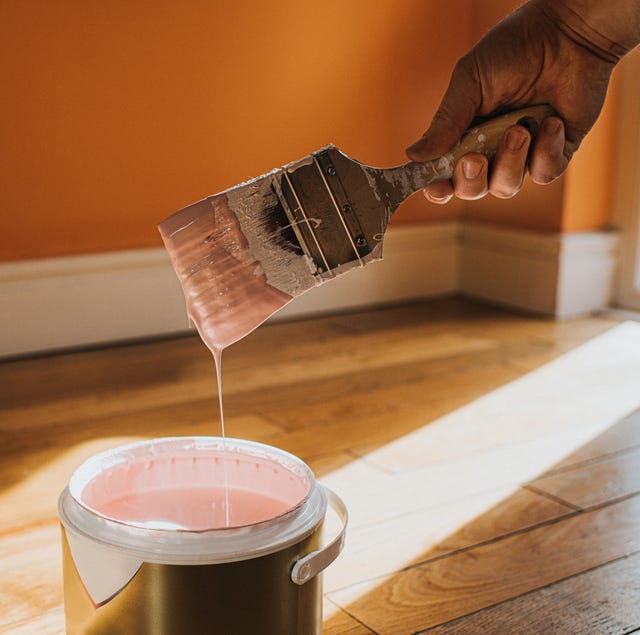
Catherine Falls Commercial Getty Images
ane Sand Away Flaws
To utilize a perfectly smooth glaze of paint to walls, ceilings, and woodwork, y'all must showtime with a perfectly shine surface. Ane pro told u.s. that "sander," would be a more plumbing fixtures job title for him than "painter," since he spends so much time pushing sandpaper.
Sanding with the advisable abrasive paper helps level out spackling compound and drywall joint compound patches, flattens ridges effectually nail holes, and feathers out repairs to inconspicuously alloy into the surrounding surface. Sanding too removes burrs and rough spots in painted forest trim, such as baseboard moldings and window and door casings. And roughing up a glossy painted surface with fine-dust sandpaper allows the new paint coat to adhere more than easily.
Use a sanding pole fitted with 220-grit sandpaper to sand the walls vertically from the baseboard up to the ceiling. Be sure to overlap each stroke slightly to keep from missing any spots. Then, sand horizontally along the top of the baseboard molding and along the tops of the walls at the ceiling. Don't apply too much pressure on the sanding pole or its swiveling head might flip over and damage the wall. Plus, sandpaper tends to load upwardly (clog) when you press down as well difficult.
To sand decorative woodwork, try using a sanding sponge, which gets into crevices and easily conforms to contours.
ii Printing Tape With a Putty Knife
Painter'due south record is an indispensable office of every paint job, specially when masking off woods trim. Merely nothing is more discouraging than peeling off the tape only to detect that paint has bled through the tape and gotten all over the trim. To avoid the pain-in-the-neck chore of scraping off the errant pigment, practice a thorough job of adhering the tape to the trim before yous start painting.
Apply the record to the wood trim, and then run a putty pocketknife over the tape to firmly press it down for a skilful seal. That'll stop whatsoever paint bleeds. And be certain to utilize true painter's tape, not masking tape. Masking tape leaves behind a glutinous residue that's hard to clean off. Plus, paint can crusade masking record to buckle and wrinkle, which lets pigment seep below it. Painter's tape tin can exist left on for days (some types upwards to two weeks) and still skin off cleanly.
🛠 Tackle This Side by side: Pro Tips For Installing Crown Molding
3 Cover Furniture
When painting a room, don't bother lugging all the furniture out of the room. Instead, push all the effects to the heart of the room and then comprehend it with plastic sheets that are taped at the bottom. This volition protect the furniture from paint drips and splatters, and also from all the sanding dust.
four Use Tinted Primer
Earlier the pros pigment walls, they fill holes and patch cracks with joint compound. But if yous paint direct over the patched areas, the compound will suck the moisture out of the paint, giving it a apartment, wearisome await—a trouble chosen "flashing." And those spots will wait noticeably unlike from the residual of the wall. To avoid seeing patched areas through the finished topcoat of pigment, it's important to start prime the walls.
Notwithstanding, instead of using white primer direct from the tin, pros tint the primer with a little greyness paint or with the color of the end paint. Tinted primer does a improve chore of concealing patched areas and roofing up the onetime paint color. Every bit a consequence, the terminate paint glaze volition exist more vibrant and may require fewer coats. This is especially true when painting over colors like red or orange, which could require three or more topcoat coats if you don't first utilise a tinted primer.
5 Purchase the All-time Supplies
Don't inexpensive out on paint and brushes. Inexpensive brushes are false economy. Buy the best brushes yous can afford, make clean them well, and they'll last you lot a lifetime. A $3 plastic castor is going to brand information technology look equally if you smeared paint on the wall with a rake. And, the beard will fall out into the pigment. Buy Wooster or Purdy paintbrushes, which toll a bit more than standard brushes, but are much more durable and apply pigment very smoothly. A quality 2½-inch-wide angled sash brush is an excellent all-circular paintbrush. Information technology's versatile and you lot can launder and reuse it until the bristles wear down to a nub.
It's also important to buy the all-time paint you can afford. It'll keep like shooting fish in a barrel, offer the best coverage, and terminal a long time. Plus, y'all'll be able to wash off grubby fingerprints without taking off the paint. And the whole painting job will go quicker and easier—and look improve in the end.
➡️ Try These: The 8 Best Paintbrushes for Almost Any Painting Project
6 Eliminate Castor and Lap Marks with Pigment Extender
The telltale sign that a room has been painted by a novice DIYer, not a pro, is that there are visible lap marks in the finished paint coat. The hush-hush to a end that'south gratuitous of noticeable lap marks and brush strokes is mixing a paint extender (AKA paint conditioner), such as Floetrol, into the pigment.
This does 2 things:
one) It slows down the pigment's drying fourth dimension, giving you more time to pigment over simply-painted areas without getting ugly lap marks, which happens when you apply fresh paint to dried paint.
2) Paint extender levels out the pigment, virtually eliminating brushstrokes. Pros use extenders when painting drywall, woodwork, cabinets, and doors. Read the tin can'southward label to determine how much extender to add to your paint, just it's typically 8 ounces of extender per one gallon of paint. If the pigment is peculiarly thick, or if you're painting in very cold conditions, more extender can be added—up to about xvi ounces.
7 Scrape a Ridge in Textured Ceilings
When painting along the top of a wall in a room with a textured ceiling, it'southward almost impossible not to become paint on the ceiling bumps. Pros have a uncomplicated solution: run the tip of a slotted screwdriver around the perimeter of the ceiling, scraping off a little chip of the texture. The screwdriver creates a tiny ridge in the ceiling, which the tips of your pigment bristles naturally glide into. Now, you tin can cut in around the ceiling without getting pigment onto the ceiling. And you lot'll never even notice the missing texture.
🪛 Bank check These Out: The Best Screwdriver Sets for Edifice, Deconstructing, and Quick Repairs
8 Scrape (Don't Record) Windows
When painting windows, don't bother taping effectually the window frame and grill. That takes too long and pigment ordinarily ends up on the glass anyway. Try this pro trick instead: equally you paint the window, let a footling paint lap onto the drinking glass. Once it'south dry, simply scrape it off with a razor scraper. Just be careful not to slice through the paint bond between the wood and glass. Otherwise, moisture can seep into the wood and cause rot.
9 Box Paint for Consistent Color
When you buy two or more than cans of the same color paint, guess what? They're almost never the same exact color. That's because paint color varies very slightly betwixt cans. And that small departure can be glaringly obvious if you open a new gallon halfway through covering a wall. To ensure color consistency from starting time to finish, pros mix their cans of paint into a five-gallon bucket, a technique known as "battle" paint. Then, you can paint directly out of the larger bucket, which eliminates the demand to pour paint into a roller tray (though you should keep in listen that the heavy bucket is harder to movement).
10 Finish One Wall Earlier Starting Another
Virtually DIY painters cutting in all the room corners, and then go dorsum and roll paint onto the walls, just that'south non the correct way to paint a room. Pros get a seamless look by cutting in ane wall, and so immediately rolling on the paint before the cut-in sections dry. This allows the brushed and the rolled sections to alloy together beautifully.
Also, cover your pigment saucepan, tray, or container with a damp towel when switching between brushing and rolling; that'll keep your paint and tools from drying out when not in use.
🪣 These Will Help: Tools to Help You Paint Like a Pro
11 Buy an Extra Bucket or Two
Information technology's smart to accept a couple of clean, empty buckets
on hand when painting considering freshly shaken pigment doesn't stay freshly shaken for very long. And you can't bring settled paint back to life with a stir stick solitary. And then, you lot must cascade paint dorsum and forth between two buckets until you've mixed in the solids that have collected at the bottom of each can. That's the all-time style, and really the only way, to ensure your paint is properly and thoroughly mixed. And if you have paint in several dissimilar cans, mix those too to ensure color uniformity.
12 Launder Roller Covers
Odd equally it may sound, information technology's important to wash brand-new paint-roller covers before using them to spread paint. Pre-washing gets rid of loose bits of fuzz that inevitably come off once you get-go painting. Launder the covers with water and a footling fleck of liquid soap, then run your hands upwardly and down the covers to pull off any loose fibers, a exercise called "preconditioning." And you tin start using the roller covers right away; you don't have to wait for them to dry.
xiii Utilise Sail Drop Cloths
Professional painters don't use old bed sheets as drop cloths, and neither should you. Thin sheets won't stop splatters and spills from seeping through to your floor. And don't use plastic sheeting either. While plastic does incorporate spills, the paint stays wet for style besides long. And if you stride in wet paint, you'll terminate upward tracking it throughout the firm. Plus, wet paint on slick plastic becomes very slippery.
Utilize what the pros use—canvas drib cloths. They're more expensive, only sheet isn't slippery, information technology absorbs splatters, and information technology's durable enough to last a lifetime. And unless you're painting a ceiling, y'all don't need a colossal-sized driblet cloth to fill the unabridged room. A canvass cloth that's just a few feet broad and runs the length of the wall is ideal for protecting the floor.
🔨 Your Next DIY: How to Restore a Concrete Patio
fourteen Lite It Up
Here's another painter term for you: "vacation." That's when you miss a spot without realizing information technology. Information technology's easy to do, especially with similar colors or rooms with bad lighting. So, get yourself a good, bright work calorie-free and use it to bank check your piece of work, either as you go or when you finish a section. Holidays typically occur effectually the edges of a room, where y'all used a brush instead of a roller. Holidays are easy to gear up when y'all're yet working, only much more abrasive after you've cleaned up and put everything abroad.
15 Clean Dirty Walls With Degreaser
Pigment won't bail to greasy, muddied, dusty surfaces, such as kitchen walls above a stove, mudrooms where kids boot off their muddied boots, or areas around light switches that get swatted by dingy hands. In those cases, use a degreaser to clean the surface prior to painting. Degreasers, which are also chosen deglossers, cut through grease and grime to permit meliorate pigment adhesion. Exist certain to read the label and follow directions because this stuff is potent. And clothing rubber gloves and eye protection.
xvi Take Off Those Electirc Plates
This is a no-brainer. Instead of laboriously masking off or cutting effectually electrical outlet plates and switch plates, grab your screwdriver and take them off. And so you'll be able to apace and easily paint around each electrical device without making a mess. Just exist sure to go on track of all the screws, so you can put the cover plates back on once the paint dries.
✅ Actress Credit: How to Cut Screws and Bolts
17 Kickoff With a Loaded Brush
Pros accept a "load-and-go" approach to painting. They load the bottom ane½ inch of their castor bristles with paint and and then tap each side of the brush confronting the inside of the can. That knocks off heavy drips and prepares the brush for painting.
By contrast, homeowners often take a "load-and-dump" approach: they dip the brush into the pigment, then elevate the loaded bristles along the sides of the container, wiping off most of the pigment. The effect is a brush that'south also dry and has too little pigment.
18 Push Paint to Avert Runs
When your brush is loaded with pigment, it's like shooting fish in a barrel to create drips and runs by applying too much paint in room corners or forth woods trim. To avoid those issues, start brushing about 1/ii inch abroad from the cut-in area. As the brush unloads pigment, movement closer and slowly drag the brush along the trim or corner. Allow the bristles gently button the paint against the cutting-in expanse where the walls come across. You may accept to do this a couple of times to get consummate coverage, but it'll avert excess paint collecting forth woodwork and in corners.
19 Give Yourself a Skilful Ready
In painter lingo, a "bad set" is when yous're in a physically bad position while painting. For example, maybe your ladder isn't quite close enough, or yous're in an awkward spot with your brush. The adept news is that well-nigh bad sets can be avoided. Just climb down and movement the ladder. Sure, information technology's annoying, merely information technology's not every bit annoying as falling into your paint bucket because you were hanging off your ladder like an America's Cup crew member. And sometimes a bad set tin can be resolved by moving an obstruction. If the refrigerator is forcing you into a tough painting position, cease and coil it out of the style.
🪜 This Will Help: The Best Extension Ladders for Your Loftier-Upwards DIY Tasks
20 Bag It Upwardly
When you lot're ready to quit for the day—but haven't finished painting—get out the roller cover on the roller frame, and then soak the cover in paint. Wrap the embrace in a plastic bag to create an airtight seal. That'll continue the roller cover fresh until y'all return to painting the next day. If you tin can't return to painting for several days, pull the roller embrace off the frame and toss it out. Then employ a new roller cover the side by side time.
As for your brushes, rinse them clean with warm, soapy water, especially if you're using latex paint, which is water-based. Use pigment thinner to clean off oil-based pigment. And then rake the bristles out straight with a brush rummage and sideslip the brushes back into their original covers or wrap them in newspaper.
Ezra Dyer Senior Editor Ezra Dyer is a Car and Driver senior editor and columnist.
This content is created and maintained by a third party, and imported onto this page to help users provide their email addresses. You lot may exist able to find more information nearly this and similar content at piano.io
thorntongracts1957.blogspot.com
Source: https://www.popularmechanics.com/home/interior-projects/how-to/g151/13-painting-secrets-the-pros-wont-tell-you/
0 Response to "When Is the Best Time to Paint Inside a House"
Post a Comment